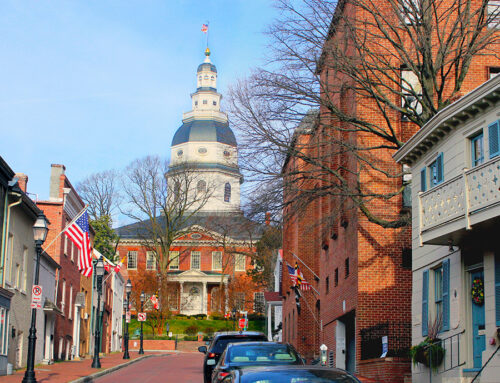
Governor Wes Moore announced a new artificial intelligence (AI) framework outlining the administration’s priorities for the development, deployment, and regulation of AI in Maryland. The framework is organized around three principles: protecting Marylanders from emerging risks, addressing the impact of AI on workers, and establishing safeguards for children.
Under the framework, the administration plans to pursue several AI-related policy initiatives, including potential legislation regulating frontier AI companies. The AI Subcabinet, in consultation with stakeholders, will develop recommendations addressing safety frameworks and testing, worker protections, third-party audits and evaluations, whistleblower protections, public reporting, and incident reporting requirements. The administration also plans to pursue legislation establishing a statutory Right of Publicity for individuals whose likenesses are replicated or used without authorization.
The framework also directs State agencies to address the use of AI and algorithmic decision-making under existing laws. The Maryland Commission on Civil Rights and relevant financial, housing, and labor regulators are expected to issue guidance regarding the application of existing civil rights, consumer protection, housing, lending, and employment laws to AI-driven decisions. The Department of Housing and Community Development will also work to restrict discriminatory algorithmic tenant-screening tools in properties receiving Department financing. Separately, the administration intends to pursue legislation addressing algorithmic rent-setting practices and the use of algorithms to target individuals exhibiting problem-gambling behavior.
On workforce issues, the administration plans to establish a standing Labor-Management Committee to engage unions representing State employees on the workplace impacts of AI. It will also work with the General Assembly and stakeholders on potential protections related to practices such as social scoring, tracking of worker organizing activity, and systemic bias. Additional initiatives include convening labor, business, and higher education representatives to develop recommendations related to workforce transitions and continuing investments in reskilling, apprenticeships, training, and career pathways.
The framework includes a separate set of initiatives focused on children and schools. These include strengthening protections related to chatbot use by young people; addressing AI and algorithmic features designed to increase engagement among users under 16; developing protocols for AI tools used by students in schools; and establishing a “do no harm” approach to classroom AI tools. The Maryland State Department of Education will also work with school districts and educators to develop model K-12 lesson plans addressing AI literacy, safety, and ethics.
The administration characterized the framework as a continuation of Maryland’s existing AI policy efforts, including the Governor’s 2024 Executive Order, the Artificial Intelligence Governance Act of 2024, and the State’s Responsible AI Policy. The announcement also referenced previously enacted legislation addressing deepfakes, AI-generated intimate images, AI impersonation, the use of algorithms in insurance coverage decisions, and AI and online protections involving children.
Several components of the framework contemplate additional legislative action, agency guidance, or further policy development in consultation with stakeholders.
Governor Moore Outlines AI Framework to Protect Marylanders | The Office of Governor Wes Moore